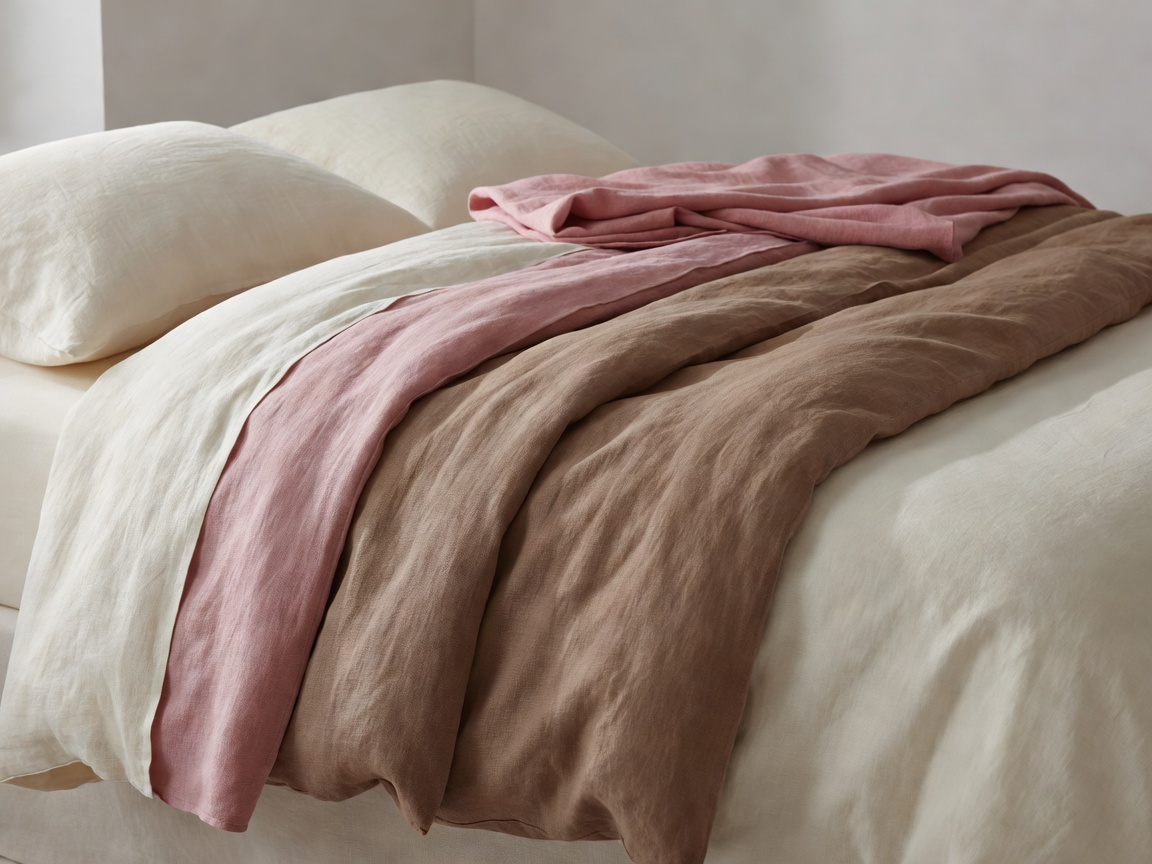
Fiber Physics: Why Pure Natural Weaves Matter
Synthetic fibers such as polyester and microfibers trap moisture against human skin, generating micro-climates of excessive heat and humidity that cause unconscious micro-arousals during the night. In contrast, hollow-fiber natural textiles—such as flax linen, long-staple organic cotton, and natural wool—possess natural moisture-wicking and thermal regulation qualities.
Flax fiber absorbs up to 20% of its dry weight in water vapor before feeling damp, actively evaporating nocturnal perspiration to keep skin temperature in the optimal REM restorative zone (around 18.5°C ambient).
Linen vs. Percale vs. Sateen: A Technical Comparison
| Weave / Fiber | Standard Density | Tactile Character | Seasonal Performance |
|---|---|---|---|
| Washed French Flax Linen | 165 – 185 GSM | Relaxed slub texture, softens continuously with laundering | All-season champion; superior breathability in summer |
| Crisp Organic Cotton Percale | 200 – 300 Thread Count | Cool, crisp matte finish akin to tailored hotel sheeting | Ideal for warm sleepers requiring airflow |
| Organic Cotton Sateen | 300 – 400 Thread Count | Silky drape, gentle subtle luster, closer weave | Excellent for cooler autumn and winter seasons |
| Virgin Boiled Merino Wool | 350 – 450 GSM (Throw) | Dense, springy, tactile weight and micro-mass | Layering piece for acoustic dampening and deep winter warmth |
Curating the Restful Color Palette
The palette of modern rest relies on organic earthen harmonies rather than clinical primaries. At Curiositypoppio, our core restorative framework balances four primary pigment categories:
- Base Cream & Calico: Applied to the primary duvet cover and fitted sheets to maximize light diffusion and evoke clean simplicity.
- Dusty Rose: Implemented across secondary pillow shams and washed waffle-weave throws, introducing a tender, soothing blush that flatters skin tones in morning light.
- Cocoa & Sand: Anchored through heavy wool foot-bed runners, upholstered bedhead frames, or heavy window curtains to provide visual weight.
Acoustic Softening through Textile Volume
Hard flat surfaces—such as bare hardwood floors, glass window expanses, and smooth drywall—cause unpleasant sound flutter. A bedroom should have a gentle acoustic decay.
Generously sized area rugs made of un-dyed high-pile New Zealand wool should extend at least 70 cm past the sides and foot of the bed. Pairing these with ceiling-to-floor lined linen curtains with 200% fullness ensures room flutter is absorbed, protecting sleep from exterior street rumble.